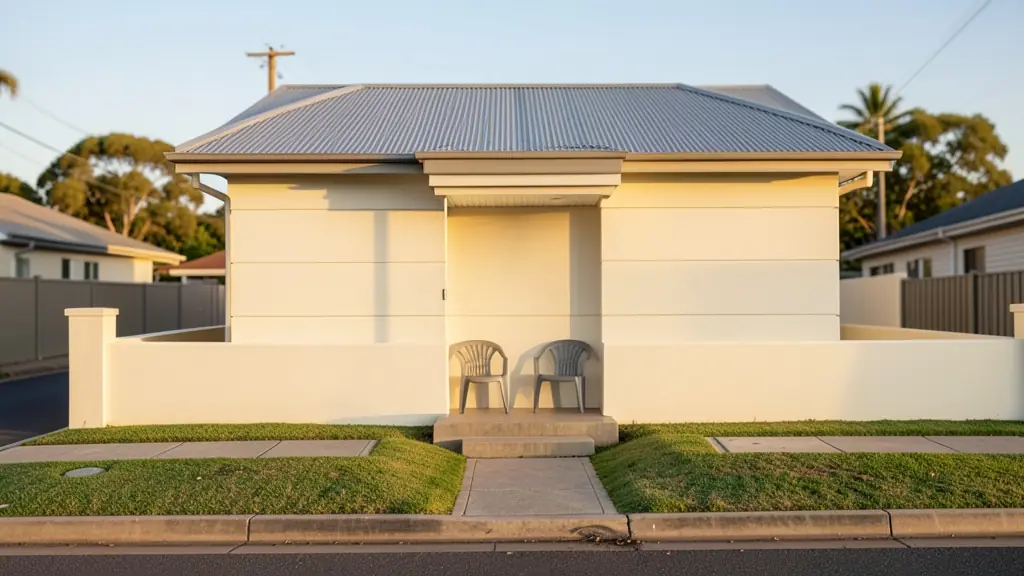
Paying for a prefab home is often harder than choosing one. Banks lend more readily on a home that is on land you own, has approved plans and, for a new home by a home builder, is enrolled with the NHBRC. Smaller buildings such as a wendy house or a granny flat are often paid for in cash, with a further advance on an existing bond, or with a personal loan at a higher rate. This calculator shows what a loan costs each month and in total, whichever kind it is.
How the repayment is worked out
It uses the standard formula for a loan repaid in equal monthly amounts: the repayment is the loan times the monthly rate, divided by one minus (1 + monthly rate) to the power of minus the number of months. Banks may add a monthly service fee and initiation fees, and the rate on a home loan usually moves with the prime lending rate, so your repayment can change.
The affordability line uses a common rule of thumb that repayments should stay under about 30% of gross monthly income. Each lender applies its own checks on income, expenses and credit record.
Ways people pay for a prefab home
- Home loan (bond): for a permanent home on your own land, usually needing approved plans, a builder enrolled with the NHBRC and, for some systems, an Agrément certificate. Banks often pay builders in stages.
- Further advance or re-advance on an existing bond, for a granny flat or extra rooms on a property you already own.
- Personal loan: quicker for a wendy house or cabin, but at a higher rate and over a shorter term.
- Supplier terms or lay-by: some suppliers offer them; read the total cost and the cancellation terms first.
This is a calculator, not financial advice. Ask your bank or a registered financial adviser before you sign.
Next steps
Price the building with the cost calculator, check the paperwork with the plans checker, then ask prefab home builders whether they are NHBRC registered and how they take payment.